

How to Choose the Right Submersible Pump for Agriculture?
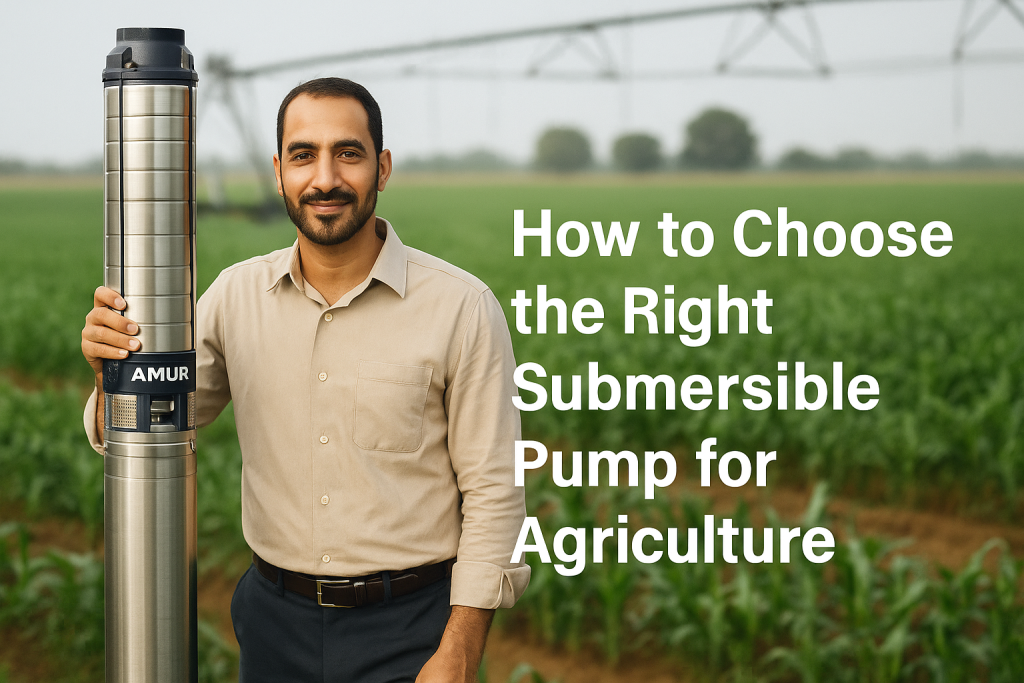
Introduction:
For farmers, water is life. The success of crops often depends on having a reliable and efficient irrigation system. A submersible pump is the heart of this system, lifting water from deep borewells or reservoirs and delivering it where it’s needed. But with so many models and specifications available, choosing the right submersible pump can feel overwhelming. This guide simplifies the process and helps you understand the key factors to consider before making your decision.
Understand Your Water Source
The first step is to know where your water comes from.
- Borewell depth: Measure the depth of your borewell. Pumps are designed for specific depth ranges, so a pump suitable for 100 feet may not perform well at 800 feet.
- Water yield: Check the borewell’s water output. A pump with too much capacity for a low-yield well will run dry and get damaged.
- Water quality: If the water has high sand content, you’ll need a pump designed with sand-resistant bearings and stainless-steel components.
Calculate the Water Requirement
Every farm has different irrigation needs depending on crop type, soil, and land area.
- Crop type: Paddy fields need more water than drip-irrigated vegetables.
- Field size: Larger areas need pumps with higher discharge capacity.
- Irrigation method: Sprinklers, drip, or flood irrigation each demand different water pressures.
Understanding these requirements helps you match the pump’s head (pressure) and discharge (flow rate) to your exact needs.
Choose the Right Pump Size and Motor Power
Pump selection is always about balance.
- A low-power motor may not deliver enough water pressure.
- A high-power motor may waste electricity and increase operating costs.
The right choice is one where the pump delivers the required discharge at the right head with optimal energy consumption. That’s why energy-efficient motors (IE2 or IE3) are becoming the new standard—they save money over the long term.
Material and Build Quality
Agricultural pumps must withstand years of continuous operation. Materials make a big difference:
- Stainless steel pumps are ideal for corrosive or sandy water.
- Cast iron pumps are durable and cost-effective for normal conditions.
- uPVC pipes are lightweight and resistant to corrosion, making them a good companion for submersible pumps in agriculture.
Choosing the right material ensures longer life and fewer breakdowns.
After-Sales Service and Spare Parts
Even the best pumps need servicing. Farmers should always choose a brand that has:
- Reliable after-sales service
- Easy availability of spare parts
- A track record of supporting customers in rural areas
This ensures that downtime during the irrigation season is minimal.
Why AMUR Submersible Pumps?
At AMUR, we design pumps specifically for agriculture in India, Africa, and other challenging environments. Our pumps combine:
- High efficiency for lower electricity bills
- Durable materials like stainless steel and robust cast iron
- Sand-resistant designs for longer life in borewells
- Customer-focused service to keep farms running without interruption
Conclusion:
Choosing the right submersible pump is not just about price, it’s about performance, durability, and efficiency. By understanding your water source, calculating your irrigation needs, and choosing a pump with the right balance of head, discharge, and build quality, you can ensure dependable water supply for your crops.
At AMUR, our mission is to make this choice easier by providing pumps that farmers can trust season after season.
🌱 Better Pumps, Better Harvests.